Research and implementation need different AI workspaces
A system that may read everything and change everything at the same time is convenient. That is precisely why it is difficult to govern.
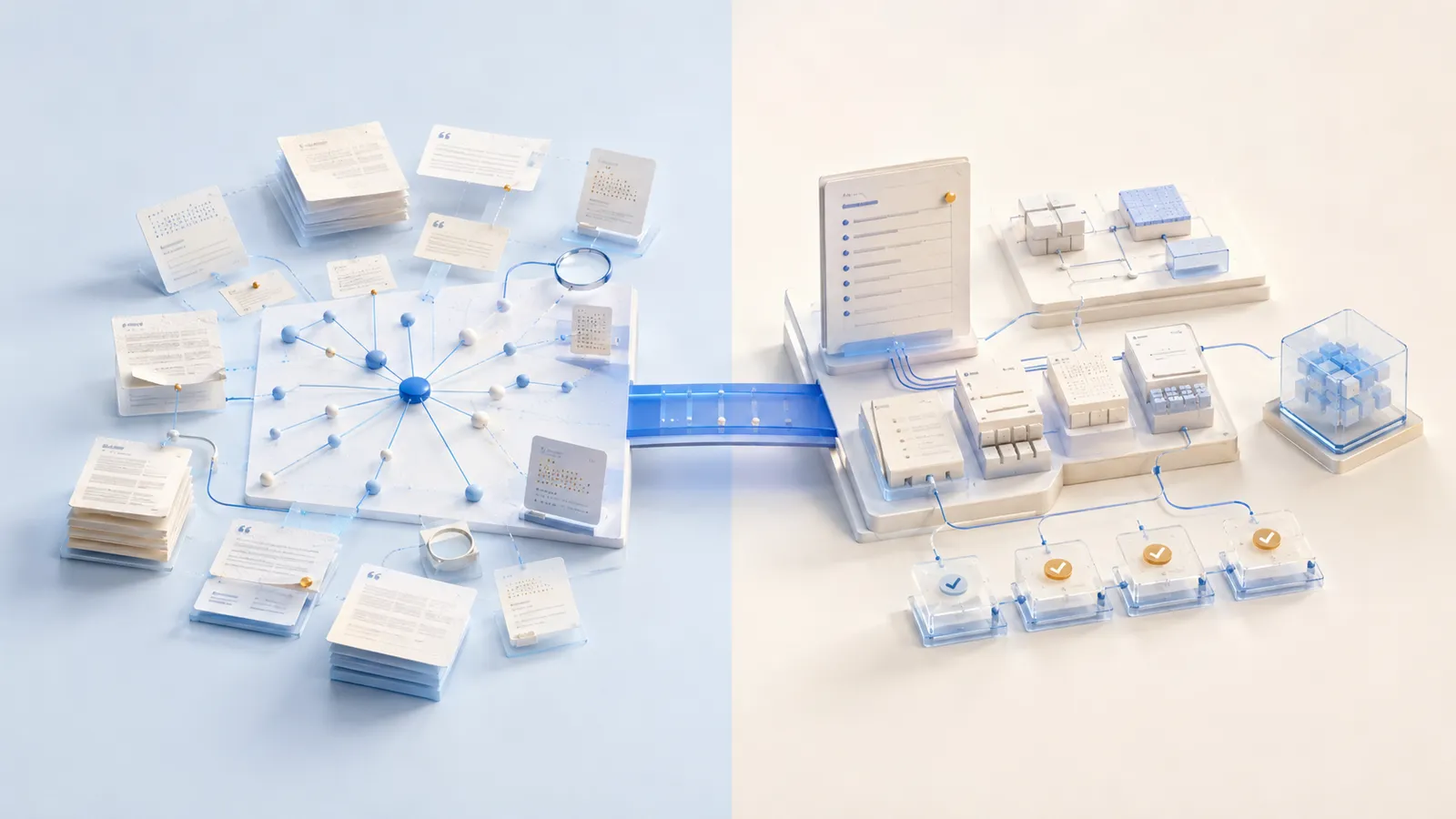
An AI system can search sources, condense arguments, modify files and prepare a publication within minutes. Technically, this looks like one continuous workflow. Organisationally, however, it combines fundamentally different activities. Research works with uncertainty. Implementation creates a new state. Between them lies a decision that should not disappear merely because the conversation feels smooth.
The same context is not automatically the same workspace
During research, a system may form hypotheses, collect contradictions and follow incomplete leads. It needs access to material whose validity has not yet been settled. That openness makes strong research possible. Implementation operates under different conditions. Its goal, affected files, permitted tools and expected effect must be clear enough for the change to be inspected and, where necessary, reversed.
When both activities are joined in one undivided chat or agent run, provisional assumptions can easily migrate into operational steps. A sentence that appeared only as a possibility during research may become the basis for a file modification moments later. The problem is not insufficient intelligence. It is the absence of a visible state boundary.
The research workspace protects openness
A good research workspace may read broadly but should not act silently. It separates observation, source, interpretation and open question. It records which statement is supported, which merely appears plausible and where sources conflict. Its outcome is not an intervention but a reviewable brief.
That brief includes source status, relevant passages, uncertainties and alternatives. The negative list matters just as much: What was not examined? Which information is missing? Which source is outdated or merely supplemental? Research becomes dependable when it delivers its limits together with its findings.
The implementation workspace needs a contract
Implementation should begin only after open research has been converted into a bounded task contract. The contract describes the intended outcome, affected surface, protected areas, verification path and rollback. An agent does not need to understand the entire project to make a good change. It needs to understand the relevant part reliably and know when to stop.
The implementation workspace should therefore hold fewer sources and fewer permissions than the research workspace. It receives accepted foundations, not every lead that was discovered. It receives write access only to the required area. Dependencies, deployment, sending, deletion and cost-incurring actions remain separately gated.
The handoff is an artifact of its own
Between research and implementation, „continue" is not enough. A good handoff states the objective, accepted findings, rejected alternatives, assumptions, affected paths, acceptance criteria and unresolved decisions. It turns conversational context into a reviewable work state.
This prevents two common failures. First, the implementation agent does not have to reinterpret the entire source space. Second, it remains visible which selection a human or reviewer actually confirmed. The handoff is not administrative overhead. It is the point where meaning is translated into action boundaries.
● Members only
Read the full article and download all files with a membership.
Unlock full article + downloads → Subscribe0 comments
● Loading comments…