When Does Which Model Help?
Distinguishing F, K and R on the same case question and justifying handoffs

A small repair business receives many service requests. Some describe routine maintenance needs; others describe a failure that needs to be remedied quickly. Management asks: “Can we use AI to handle requests faster?” One team member thinks of automatic sorting, another of response drafts. A third person asks what happens to customer data with the provider. Three questions are already layered on top of one another: what exactly should improve? Who may decide on the new way of working? And which specific contractual or legal questions must be examined?
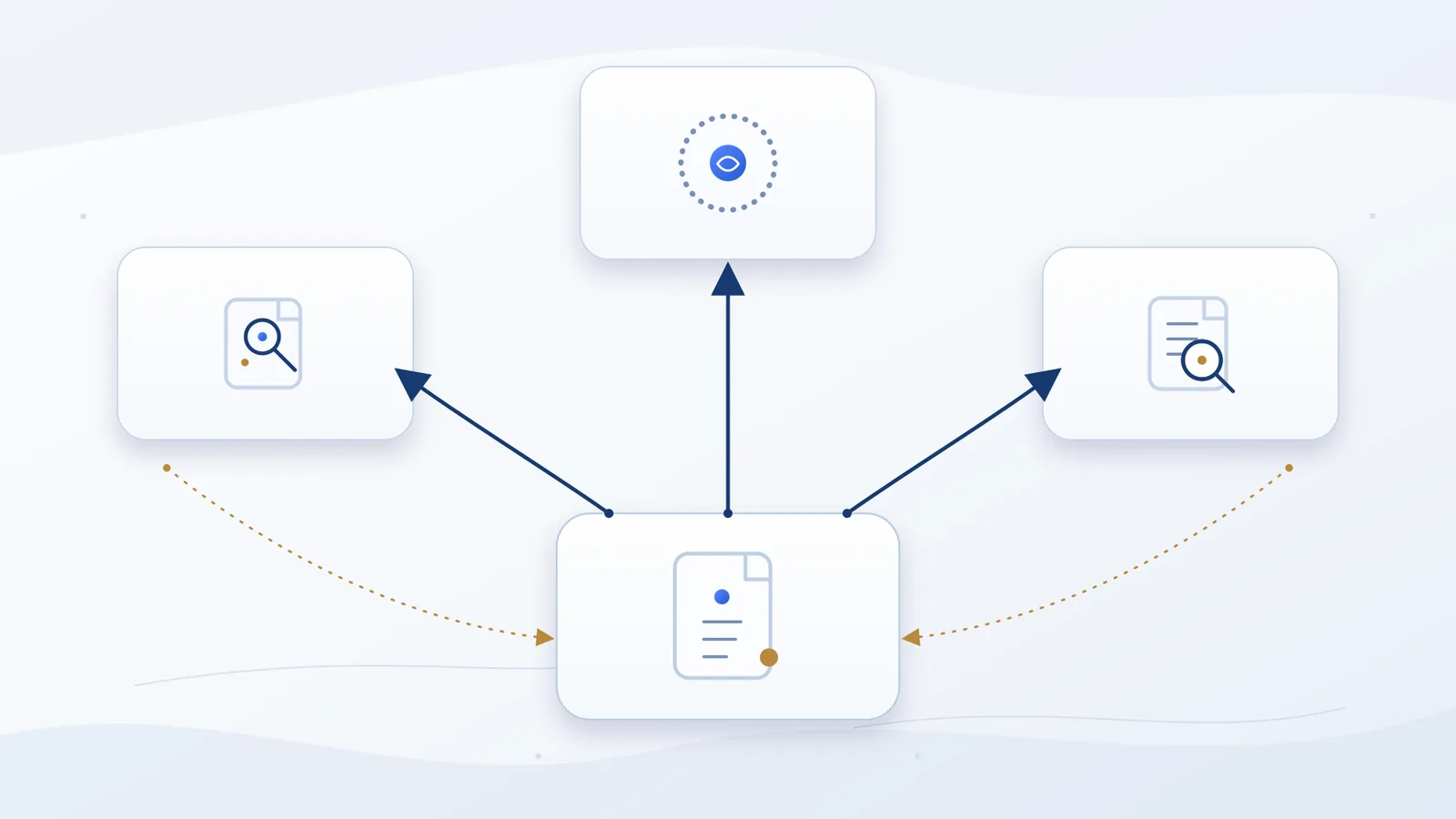
This is precisely where the distinction between Question Model F, Consultation Model K and the five-phase Advisory Model R helps. They are not three variants of the same checklist. They address different tasks. F sharpens an open or biased question. K structures a decision that includes several affected people and competing values. R organises a limited specialist-review assignment when a specific contractual, legal or regulatory question exists.
The case and all subsequent decisions are entirely fictional. They describe neither a tested product nor a real company. The models are applied as designs, not as independently validated procedures.
Choosing a procedure is already a decision
A procedure is not neutral packaging. Anyone who first frames a question as an efficiency problem may unintentionally already assume that deployment should take place. Anyone who immediately demands a legal review, by contrast, may shift a still unclear substantive question into specialist language. And anyone who opens a consultation without naming its influence on the decision risks a participation round that listens but cannot change anything.
The choice of model determines what the team attends to first: terms and assumptions, affected people and values, or a delimited set of facts that must receive specialist assessment. It therefore also determines the result received by the next person. A revised question is not a governance decision. A consultation outcome is not a legal opinion. A legal assessment, in turn, does not by itself answer whether an organisation considers deployment desirable.
Aristotle describes practical wisdom as judging and deliberating about changeable human affairs; concrete individual cases matter, not only general rules. This is a limited philosophical lens for this article: a method can provide orientation, but the appropriate choice depends on the concrete subject matter and its consequences. It does not confirm modern AI methods or grant special authority to the Aristotelian model in contemporary organisational governance. [Aristotle, Nicomachean Ethics, Book VI, chapters 5–8]
An external comparison makes the limit of step sequences visible. NIST’s AI Risk Management Framework 1.0 arranges activities into the functions Govern, Map, Measure and Manage. NIST explicitly says that the activities described do not form a checklist and do not necessarily occur in a fixed order. The framework is voluntary and is intended to include context and trustworthiness considerations in the development, deployment and evaluation of AI. It does not validate F, K or R. It does, however, show why good governance is not completed by a rigid “always step one, then step two.” (NIST, AI RMF 1.0, 2023)
UNESCO’s Recommendation on the Ethics of Artificial Intelligence likewise stresses that responsibility for the lifecycle of an AI system must be assigned to people or existing legal entities, and that participation by different stakeholders is important for inclusive governance. This is normative orientation, not evidence that a particular consultation method is fair or effective in an individual case. (UNESCO, Recommendation on the Ethics of Artificial Intelligence, 2021, paras. 35–36 and 47)
Three models, three different objects
The models cannot usefully be arranged on a scale from “simple” to “advanced.” F is not the preliminary stage for every decision. K is not automatically more thorough than F. R is not final clearance. A helpful question is therefore not “Which model is best?” but: What work is actually at hand now?
| Model | Object | Typical trigger | Result | What does not follow from it |
|---|---|---|---|---|
| F – Question and Prompt Optimisation Model | An unclear, premature or ambiguous working question | The objective, scope or implicit assumptions are open | A specified question or adapted working prompt, alternatives, documented uncertainties and a limited next step | No proof of facts, no ethics clearance and no rollout decision |
| K – Consultation Model | A shared learning or governance decision with different perspectives | Consequences, values or responsibilities are distributed across several affected people | A reasoned recommendation, roles, feedback channel and, where appropriate, a limited pilot | No automatically legitimate consensus, no legal clearance and no validated evidence of effectiveness |
| R – five-phase Advisory Model | A concrete need for legal, contractual or regulatory review | System, roles, data flow and specialist question are sufficiently delimited | A specialist-review assignment with documents, responsibility, findings, conditions and open points | No general ethical decision and no legal advice from an article or an AI |
The short version is: F works on the question. K works on the collective decision. R works on a concrete specialist-review assignment. This separation is an editorial interpretation of the provided models, not a standardised measurement instrument.
The same initial problem through F: examine the question first
“Can we use AI to handle requests faster?” is not yet a good working assignment. “Faster” can mean a shorter waiting time, a quicker first response, less manual data entry, or more completed cases per day. “Handle” can mean simple sorting, a response draft, or a final decision on priority and entitlement. While these terms remain open, it cannot be reliably compared whether AI, a better template, a clearer responsibility rule or an additional hour of staff time is suitable.
F v5 follows the sequence A → B → D → C. In this model, letter D comes before C; this is not an accidental rearrangement. The accompanying F materials, however, show two related starting forms: one begins with a main question and expands it together iteratively; another takes user input and feedback and aims for a structured, optimised prompt. Both use modules A to D, but their input and output assignments are not identical. In the following case, we use question expansion as the entry point and retain the final working prompt as a possible C output. A real method-selection card should record the F starting form chosen. This article uses the shared architecture compactly and does not expand it into a buffet of methods.
A – clarify input, context and objective. The team asks which concrete activity is delayed. In the fictional case, it is not known whether time is mainly lost reading, identifying missing information, prioritising, or writing the first response. The desired improvement, usable data and non-AI option are also open. “Faster” thus becomes a question for examination, not a promise of success.
B – develop competing explanations. F should not confirm the first assumption using a plausible-sounding prompt. The team keeps several explanations alongside one another: requests arrive incomplete; priority rules are inconsistent; employees frequently switch between tasks; or only the response templates are difficult to find. These possibilities require different solutions. If the cause has not yet been examined, an AI option must not be treated as though it were already the appropriate answer.
D – address uncertainty and feedback. The team records which information is missing, which assumptions would need testing, and what happens with unclear or faulty output. If there is no fallback, the question is not “How do we automate anyway?” but “Which manual handling remains available, and who recognises the exceptional case?” Feedback from a later test can change the question again. The context or NLP analysis mentioned in the PDF is a model proposal; it is not evidence that such a function has been technically implemented or would be reliable.
C – hand over the working assignment. C combines the chosen question form with a transparent process summary and GROW action plan; depending on the F starting form, an expanded question or an adapted prompt is foregrounded at the end. One possible F output is: “Which limited support for intake and response drafting could handle incoming requests without overlooking urgent or disputed cases, and which non-AI alternative should be compared first?” It also includes the assumptions still open, data to be examined, a fallback and the next small step: first grouping a sample of requests without personal content by processing step, provided a permissible data basis exists for this. In the GROW plan, the Goal would be to understand the bottleneck in intake before selecting a solution. Reality is still insufficiently evidenced; Options include a clearer input template, better responsibility rules, a human sorting step or a limited AI draft. Will is a small, responsibly owned review step with a data and fallback rule. The question decides neither procurement nor deployment.
F thus visibly changes the case: “AI for faster handling?” becomes an examinable question with several possible causes. This is a better basis for the next decision, but not yet an answer to whether the organisation should act.
When F hands over to K
F→K is useful when the clarified question requires a shared decision. In the example, sorting by urgency could change the team’s everyday work and influence which customers receive a response first. The issue is now no longer solely what the process should accomplish. It also concerns which error burden is acceptable, who identifies exceptions, which perspectives have been missing so far, and who is responsible for the new rule.
The handover object should contain at least:
the specified question and the actual object of decision; the options considered so far, including a non-AI alternative; open assumptions and missing evidence; the groups affected by the rule or responsible for implementing it; the question of what advice or participation can still change; the human decision-maker and a feedback and escalation route.
If this information is missing, K can easily receive a question that is too broad. F should then clarify again what is to be decided at all. Conversely, K is not permitted only once every technical detail has been fixed. If the problem is already understood and the conflict mainly concerns different consequences and values, focused consultation can itself make the still open requirement visible.
K: a decision becomes social and organisational
Consultation Model K is broader than a discussion guide. It connects learning objectives and competencies, topic modules, interdisciplinary reflection, ethics and governance, evaluation, and application scenarios. The methodological core cycle describes four steps:
1. Exploration: identify the case, objectives, context and relevant perspectives.
2. Reflection and analysis: critically examine assumptions, knowledge, values and consequences.
3. Decision and recommendation: weigh options and formulate a reasoned action or non-action.
4. Feedback and evaluation: collect feedback and organise later review.
The more detailed case scenarios additionally develop five application steps: exploration, reflection, decision, implementation or pilot, and final assessment. This is a separate case elaboration. The five steps do not replace the four-stage core cycle. Precisely because both sequences begin with similar terms, articles, instruction and later working materials must keep them clearly distinct.
In the repair business, exploration could show that a faster response draft may help employees, while automatic ordering decides which requests are seen first. Reflection makes the conflict concrete: highly standardised sorting may speed up routine cases but overlook an exception if important urgency characteristics are missing from the entered texts. Employees may know where this gap arises; customers bear the consequences of a delayed response. There is no presumed agreement and no invented consensus.
A limited recommendation could be to test only response drafts internally for the time being, have every output reviewed by a responsible person, and not automate prioritisation or rejection. Urgent or disputed requests remain outside the test. An accessible correction route and a named stop signal belong to the decision. This is a conceivable result of the fictional case, not a general recommendation for all businesses.
K changes the option because the initially broad AI idea becomes a limited draft test without automatic prioritisation. For an instructional or SME pilot, the five-stage scenario form can help make implementation and final assessment visible. The core cycle itself retains its four steps. The model’s proposed evaluation ideas, such as pre/post comparisons or learning analytics, are design proposals in the original; by themselves they do not demonstrate increased competence and do not justify collecting data without separate review.
K replaces neither responsibility nor specialist review. A moderated group can overlook missing perspectives, reproduce power differences, or make a well-documented decision that is nevertheless unjustified. Participation is therefore no automatic quality seal. UNESCO’s Recommendation supports the normative importance of participation and assignment of human responsibility, but it provides no certificate for K or for the fictional decision.
When K hands over to R
K→R is not a transition to a higher authority that resolves the ethical problem. R becomes relevant only when a specific specialist question emerges during consultation. In the example, the group may determine that it does not yet know whether certain service requests may be transmitted to an external AI provider and which contractual conditions apply to storage, onward transfer or deletion. This is initially an open question for review. The article does not decide which law applies or which contract clause is sufficient.
A usable R assignment names:
the concrete system and intended function; the participating roles and actual data flows; the contract or documents to be examined; the jurisdiction and relevant reference date; the precise question and the decision the result can influence; the professionally qualified person or body that will examine it; the requested return: finding, conditions, evidence required and open points.
If jurisdiction, data flow or system are still unknown, the R assignment is not ready. F can first organise the question and facts; an organisational or technical person can obtain missing documents. If the issue is already narrow and complete, R can also be handled directly without prior K consultation. Conversely, a societal or organisational question of values does not automatically become a legal question merely because a law might be implicated.
R: delimit the specialist-review need and return it
Model R describes five phases: Preparation and anamnesis → Analysis and problem definition → Advice and solution development → Implementation and documentation → Evaluation and follow-up. For this article, its central value is not a sweeping compliance narrative, but the way it structures a professionally reviewable assignment and a route back into the organisational decision.
In preparation, the objective, technical context, contracts, roles and time frame are assembled. Analysis identifies specific gaps, risks and priorities. The advisory phase develops specialist options with the relevant competencies; it may not be replaced by AI-generated text. Implementation and documentation assign measures, responsibilities and evidence. Evaluation and follow-up examine whether conditions have changed and whether renewed specialist review is required.
The return to K should not say “cleared” or “legally secure” unless this has been professionally examined and is accurate within the concrete scope. For the fictional case, a responsible return would instead be: “The contract documents do not yet state unambiguously whether request contents reach further service providers and how long they are stored. Before a test, these points must be clarified by the responsible specialist body. The applicability of individual duties must be examined with jurisdiction, data category and intended function.” The exact wording depends on the actual documents; these are not available in the scenario.
Only the responsible organisation decides whether such specialist review changes, limits or stops the option previously considered. R can return a new condition to K. If the finding changes the assumption about what task is intended at all, a new F question begins. This creates a feedback-capable connection, not a one-way street.
● Members only
Read the full article and download all files with a membership.
Unlock full article + downloads → Subscribe0 comments
● Loading comments…