Document so a project still works months from now
Not every decision needs a long explanation. But the next person should be able to understand how an idea became a reviewable result.
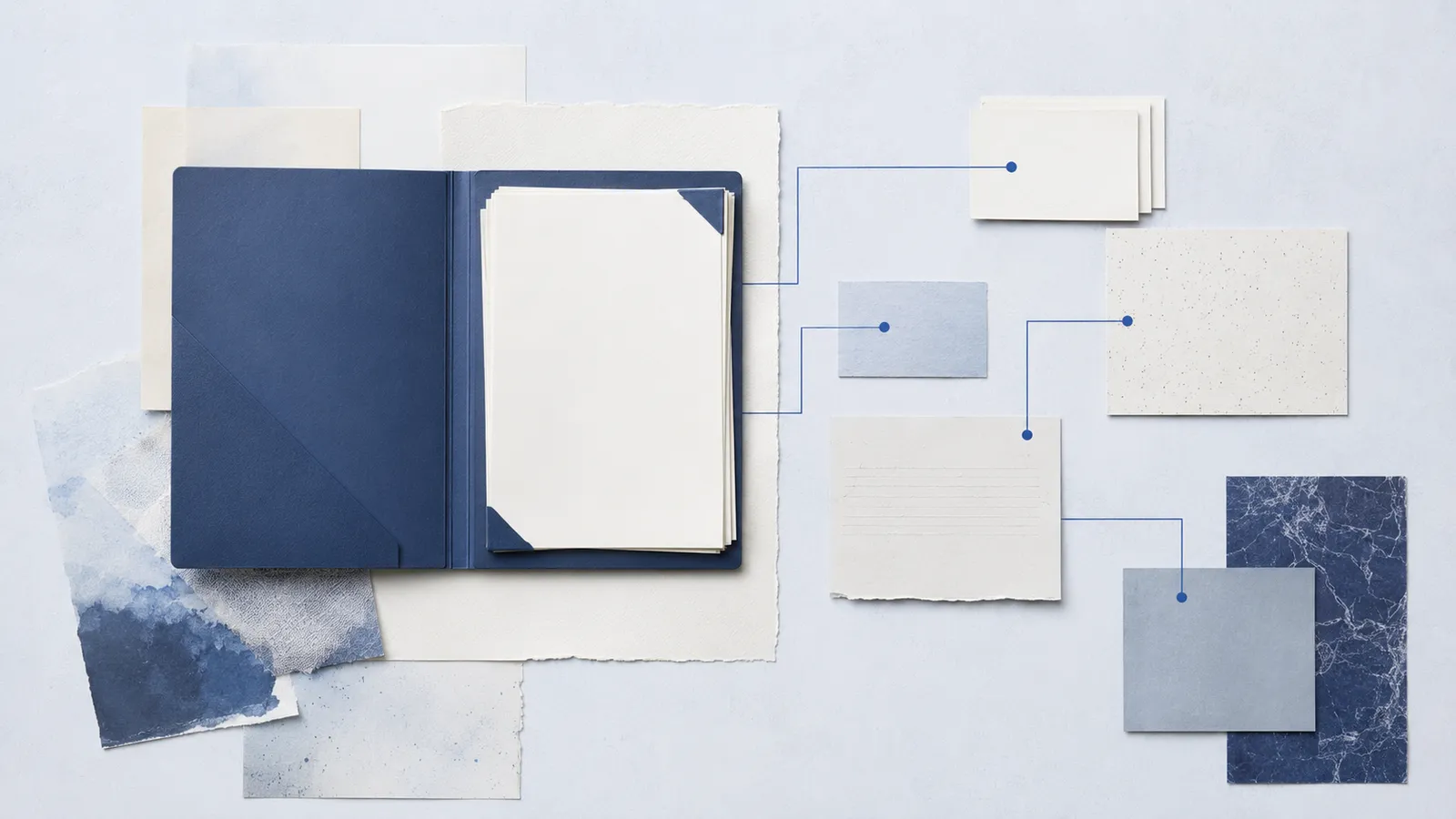
A project can look finished and still be lost. That happens when its output remains but its story disappears: no one knows which starting conditions applied, which decision was deliberate, which assumption still holds, or how to check the work again. Documentation is not an afterthought. It is the form in which work survives its first moment.
The loss rarely comes with a bang. It comes quietly: a person moves on, a chat is deleted, a tool gets an update. What was obvious yesterday is, half a year later, only a result without a reason. Preventing that does not take more writing — only the right writing.
Do not record everything — record what matters
Good documentation is not a log of every move. It preserves the information that makes a later decision understandable. Recording every detail creates noise. Saving only the outcome creates riddles. In between is a short, reliable explanation: What was the aim? What was decided? How do we know it works? What would someone need to know to continue usefully?
These questions matter especially when people, tools or conversations change. A new system does not need a novel about the past. It needs a clear state: goal, material, rules, open question and next reviewable step. That is enough to create continuity — and little enough to maintain.
A simple rule of thumb helps: document what you yourself would have forgotten on re-reading. Not the obvious, but the surprising — the turn no one still keeps in mind. That one question keeps the record small and its value high.
An outcome without its path is hard to trust
Imagine finding a convincing file a few months later. It looks complete. But why was this exact structure chosen? Which sources or requirements mattered? What was deliberately left out? Without those answers, every change becomes guesswork. You can use the text or tool, but you cannot reliably judge whether an adaptation preserves the original intention.
Documentation does not make the path sacred. It makes it visible. That is precisely what allows it to improve later. A note about assumptions is not a defence of old decisions. It is an invitation to test them with new knowledge.
Trust comes not from perfection but from traceability. A visibly reasoned result may contain mistakes — you can find and fix them. An unexplained result must be either believed blindly or discarded entirely. The path is what opens the third option: to change with intent.
The smallest useful project record
For many projects, one page is enough. It starts with a sentence about the goal: Which problem should become easier for whom? Below that sit the materials used, the key decisions and the rules the outcome must respect. Then come open points and a short instruction for checking or repeating the work.
This structure separates facts, decisions and assumptions. That matters. Material can change. Decisions can be revised. Assumptions need testing. When all of it exists only as flowing prose, these states blur. When they are separate, a project can continue without anyone having to guess its history.
A team built a reply assistant for support. As a fact, the record notes: it was based on 200 real tickets from last quarter. As a decision: the assistant proposes replies but never sends them itself — chosen deliberately, because tone must be reviewed. As an assumption: „the most common questions stay stable across the year" — not yet proven. As a re-entry path: „load new tickets, spot-check ten replies against the three tone rules." Half a year later, every new colleague immediately knows what holds, what is negotiable and what remains to be tested.
Reproducible means a new beginning is possible
Reproducibility does not mean every result must be identical down to the final character. It means another person — or you after a long pause — can find the starting point, the steps and the quality bar. You can see what changed, test an alternative and compare the consequences.
So write down more than what was done. Write how to recognise that the next run is good enough. A short check is often more valuable than a long description: „compare the answer with these three requirements," „make missing information explicit," or „stop when an assumption lacks evidence." That turns documentation into an active working aid.
The quality check is the part most easily forgotten and most urgently needed. It turns „looks good" into „meets these points." Write it down once, and the next run no longer argues about the standard — it only measures against it.
The one-page project record
A single record holds the initiative together. It captures goal, starting point, decisions, rules, open points and a re-entry path on one page — copy it and fill it in while the decisions are still fresh.
# PROJECT RECORD

**Goal**
This project should make … easier for …

**Starting point and material**
What matters is …

**Decisions made**
We chose … because …

**Rules for the outcome**
It must … and must not …

**Open points and assumptions**
Still to check: …

**How to repeat it**
Start with … Then check …
A good project record is not insurance against change. It makes change safer. When goal, decisions, open questions and checks remain visible, a project has a future beyond the chat, the meeting or the person currently working on it.
Worksheet: Create a project record that can keep working
Choose a completed or ongoing project. Do not write a chronology. Build one page you could use to re-enter the work meaningfully six months from now.
Name goal and user. Write one sentence: Which problem becomes easier for whom? Remove every word that gives no concrete orientation.
Separate material from decisions. Write the key foundations separately from the decisions that arose from them. Mark one decision that could change later.
Leave assumptions visible. Phrase at least one assumption as a testable statement. Add the information that would confirm or challenge it.
Write a re-entry path. Describe the starting point, next step and quality check in no more than five sentences. Then give the record to someone who does not know the project.
All materials to download — the topic overview and the worksheet:
● Members only
Read the full article and download all files with a membership.
Unlock full article + downloads → Subscribe0 comments
● Loading comments…