A second brain for people and models
How a readable knowledge system grows from notes, decisions and connections.
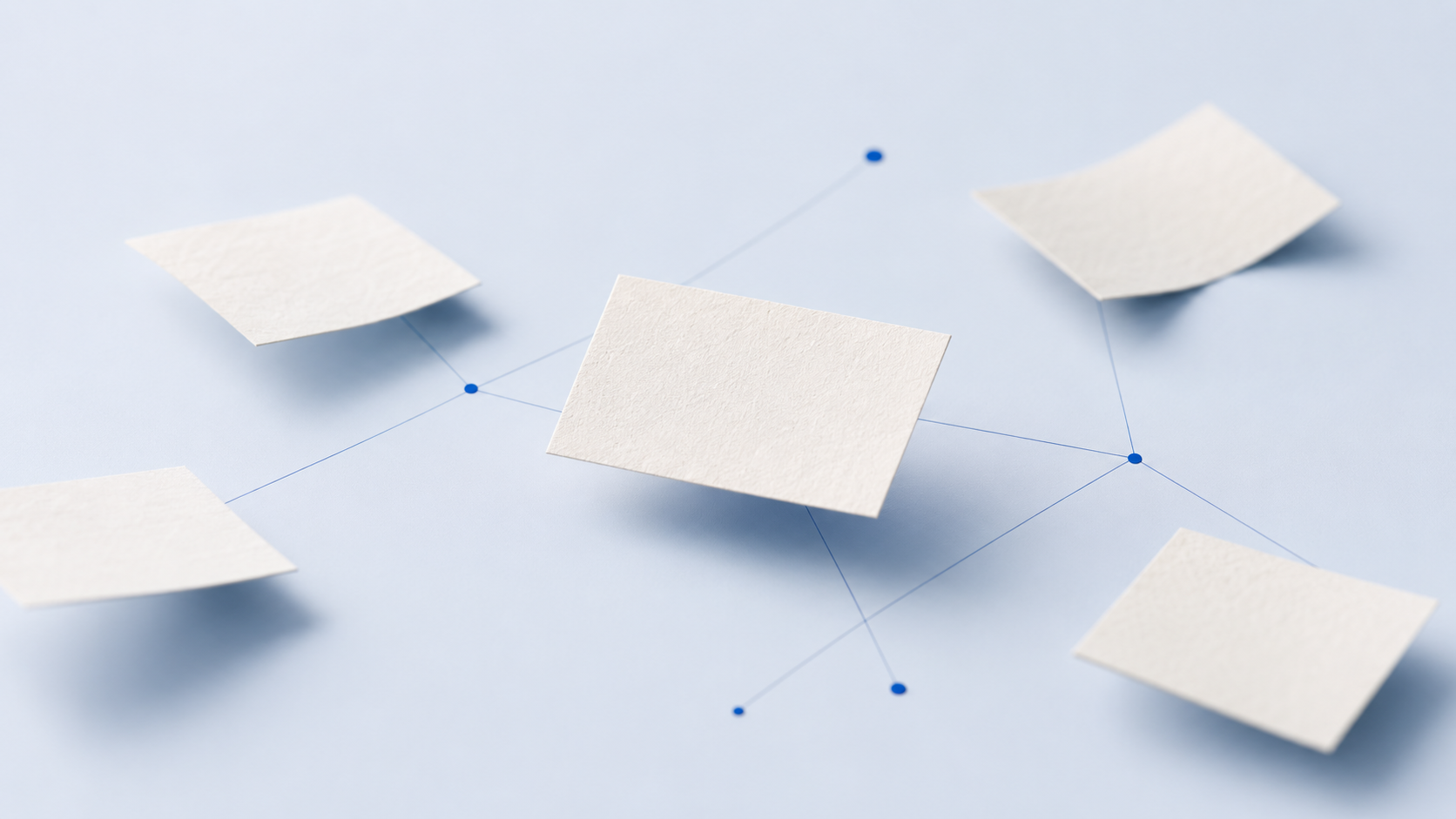
Knowledge rarely disappears because it was never captured. It disappears because it cannot later be found, understood or developed further. A second brain does not solve this with a perfect app, but with a simple promise: what matters gets a place, a clear name and a connection to what follows from it.
Do not collect more; find again
Many folders grow like attics. There are PDFs, screenshots, chat excerpts and loose ideas, but no clear answer to the essential question: which of these still applies? A second brain is therefore not a digital warehouse. It is a working space you can enter again later.
The benchmark is surprisingly human: after three months, can you understand why a note exists, what it refers to and what you meant to do with it? If you can, a model can work with it meaningfully too, with far less explanation.
The smallest useful structure
You do not need a database or a complex taxonomy at the start. Three note types are enough: sources record what you saw or read; decisions record what applies to your project; working notes connect both to a next action.
Folders provide a calm frame. Links provide meaning. A note about a client conversation becomes valuable when it points to the decision made and to the draft that emerged from it. That creates a traceable path rather than an isolated pile.
Readable for people, usable by models
A good knowledge base does not have to be mysterious or technical. Clear headings, short paragraphs, a date, a stated status and unambiguous links make it readable for you. The same clarity helps a model locate relevant passages instead of interpreting an unordered mountain of material.
The aim is not to hand your thinking over to a model. It is to record your thinking clearly enough that you can decide what to adopt, discard or develop.
A small vault that is allowed to grow
# PROJECT: NEW WEBSITE

## Decision: Tone
The presence should feel calm, precise and personal.

**Reason:** [[Client conversation]]
**Consequence:** [[Homepage draft]]

## Source: Client conversation
Clear services, little jargon and a quick entry matter.

**Continue to:** [[Decision: Tone]]

## Working note: Homepage draft
The order of the three core offers is still open.

**Foundation:** [[Decision: Tone]]
A second brain is not a second self. It is a reliable place between memory and decision. The more clearly it grows, the less you have to explain from the beginning — to yourself, your team or a model.
Worksheet: Build your first small knowledge space
Choose a current project. Create three short Markdown notes and connect them.
Record one source. Write down what you learned. Give the note a clear title.
Formulate one decision. Record what follows from the source for your project — and why.
Create a working note. Write the next concrete step and link the decision.
Test the path. Open every note. Can you see within two clicks where the decision came from and what happens next?
Both working materials for this article — the topic overview and the worksheet with a reflection space to fill in — are available for download here:
● Members only
Read the full article and download all files with a membership.
Unlock full article + downloads → Subscribe0 comments
● Loading comments…